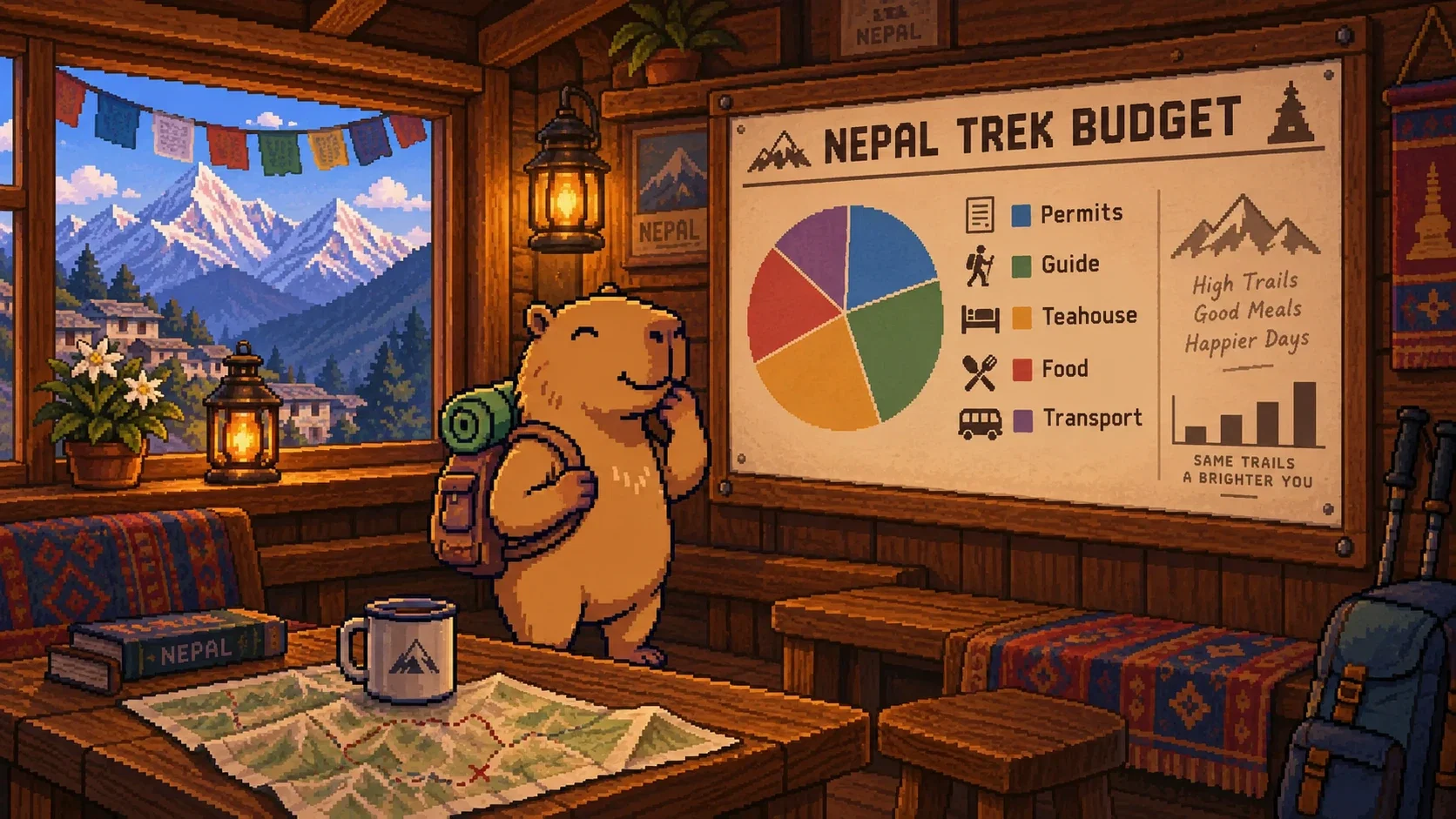
How much does a trek in Nepal cost? There is no one-size-fits-all figure for all routes. Duration is one of the main factors, but the budget also depends on permits, whether you hire a guide or a porter, transport to the start of the trail, and the remoteness and altitude, all of which gradually increase the cost of meals and services.
The price ranges below provide a guide to help you plan your budget and compare quotes from agencies. They are based on official rates and prices published or recorded in September 2026. They combine fixed costs, daily expenses and amounts charged per person, per group or per porter.
AOn the trail: the culture of trekking in Nepal
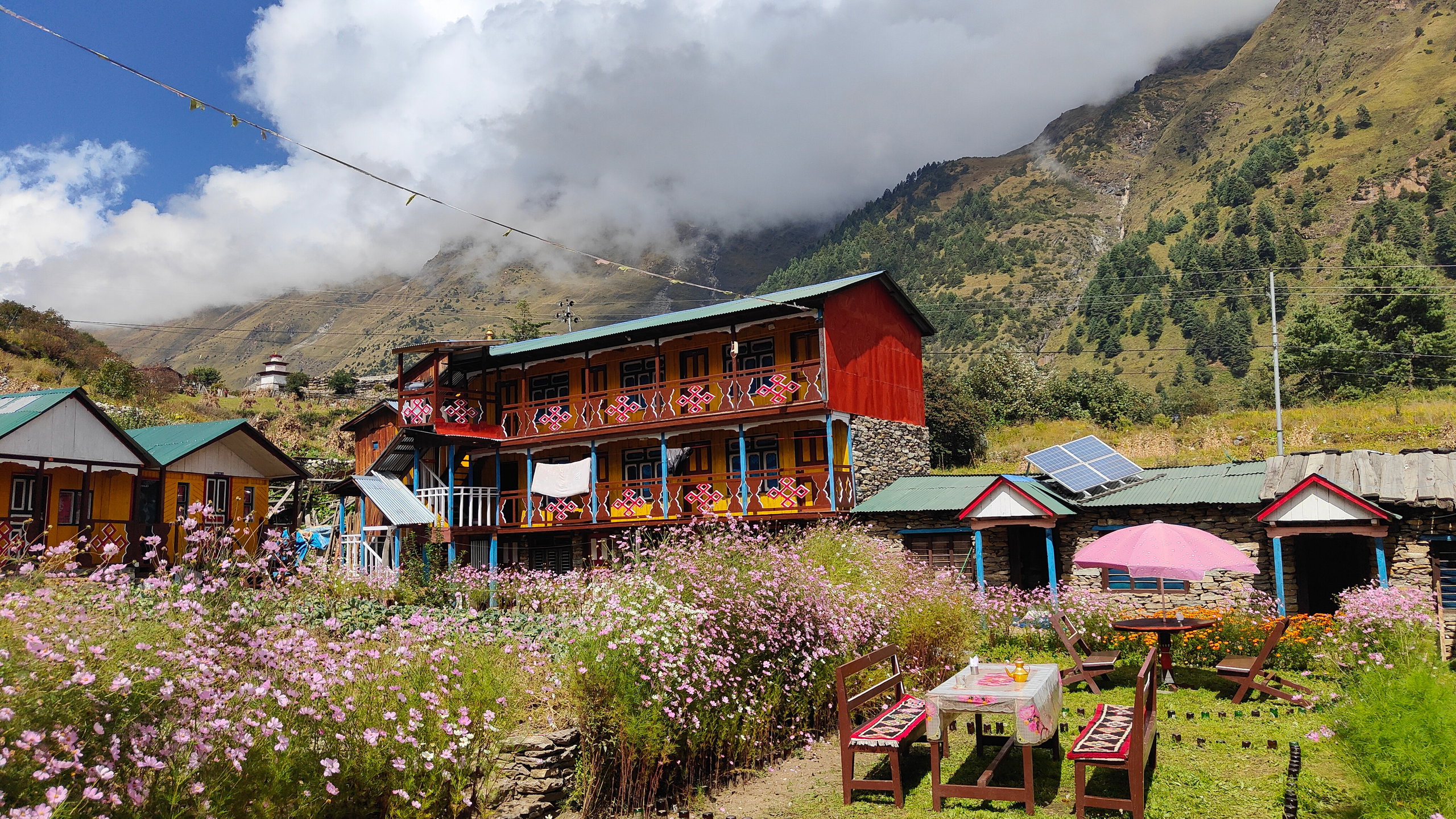
In Nepal, trekking centres on major routes such as Everest, the Annapurnas, Langtang and Manaslu. You generally walk from village to village and stay in family-run lodges known as teahouses, dotted along the route. On these classic circuits, it is therefore not usually necessary to carry a tent or several days’ worth of food.
Bivouacking is not usually practised on the major circuits, but may become necessary on certain remote routes, particularly in Dolpo, Kanchenjunga, Makalu or Dhaulagiri, where lodges are either absent or too far apart. This then involves a trek that is more demanding both technically and logistically, often involving tents, a cook and a dedicated support team: it is more expensive and more complex to organise, whilst generally offering a lower standard of comfort than the teahouses. In this article, we will focus on teahouse treks, which are by far the most popular.
BThe main areas of expenditure
These figures are approximate. When hiring a guide or porter, always check which staff costs are included in the quoted price.
| ItemAmount | Approximate price range | How to read this |
|---|---|---|
| Tourist visa | 30, 50 or 125 USD | For 15, 30 or 90 days |
| Permits | Varies greatly | See below |
| Trekking insurance | Varies greatly | Depending on your personal circumstances, the level of cover required and the altitude involved |
| Transport from Kathmandu | Varies greatly | Depending on the distance and whether you travel by bus, jeep or domestic flight |
| Licensed guide | 25 to 45 USD | Per day for a group |
| Porters | 20 to 30 USD | Per day and per porter |
| Overnight stay in a lodge (teahouse) and three meals | 25 to 55 USD | Per day and per person |
| Extras on the trail | 5 to 15 USD | Per day and per person |
| Guide’s tip | 5 to 10 USD | Per day for the group, as a guide |
| Tips for porters | 4 to 6 USD | Per day and per porter, for guidance only |
| Set aside a bit for local unforeseen expenses | 10–15 per cent | Estimated local expenses, excluding international flights |
CCosts may vary depending on the itinerary and group size
C.1Permits
The cost of permits depends mainly on the region you’re travelling through. On many classic treks, you’ll need to budget for a TIMS Card and/or an entry fee for a national park or conservation area, such as the ACAP in the Annapurnas. These fees are generally modest: they often amount to around 2,000 to 3,000 NPR (13 to 20 USD) per permit or area concerned.
The cost rises significantly in regions subject to a Restricted Area Permit (RAP). These permits are charged in dollars and their price varies depending on the region, the season and the duration of the trek. For example:
- Manaslu: 100 USD for the first 7 days from September to November, then 15 USD per additional day; from December to August, 75 USD for the first week, then 10 USD per additional day.
- Upper Mustang: 50 USD per day per person.
- Upper Dolpo: 50 USD per day per person.
In practice, standard permits represent a fairly modest expense; it is mainly the RAPs that can significantly increase the budget.
C.2Transport to the trailhead
Transport costs vary too much from one itinerary to another to give a general range. Some starting points are accessible by local bus for a few dollars per person, others require several shared jeeps, and Everest treks may involve a domestic flight costing several hundred dollars return. For a private vehicle, the cost per person decreases when shared amongst several trekkers.
Check the exact departure and arrival points in the trek description. Then ask the agency whether the quote includes transfers from Kathmandu or Pokhara, any changes of vehicle and the return journey after the trek.
C.3Sharing group costs
The guide’s fee is charged for the whole group. The cost per person therefore decreases as the group size increases. The porter’s fee is per porter and is often shared between two trekkers, subject to the weight limit agreed with the agency.
A very low daily rate may simply mean that the costs of food, accommodation, transport, equipment or staff insurance have been moved to another line item in the quote. Furthermore, tips form a significant part of guides’ and porters’ earnings: the range given in the table is for guidance only, and you may give more or less depending on the quality of the service provided.
DBefore booking: get a truly comparable quote
Before comparing two offers, ask for a quote specifying:
- permits and administration fees included
- the number of days charged for the guide and porters
- the staff costs actually covered
- your meals and accommodation on the trail
- transport, with specific departure and arrival points
- expenses to be paid in cash
- the conditions applicable in the event of an extra day or a change to the itinerary
The most useful quote isn’t necessarily the cheapest one. Above all, it should make it clear what has already been paid for, what will be paid for whilst on the trail, and what you’ll be responsible for if the programme changes.
ESources
- Nepal Tourism Board: tourist visa
- Nepal Tourism Board: TIMS card
- Nepal Tourism Board: park entry fees
- Nepal Tourism Board: restricted area permits
- Nepal Intrepid Treks: trekking costs in 2026
- Travel Himalaya Nepal: teahouse prices in 2026
- Nepal Intrepid Treks: tips for guides and porters in 2026
- Gokyo Treks: card payment fees
- Glorious Himalaya: terms and conditions for card payments
- Nepal SBI Bank: international card fees at ATMs
- A Social Nomad: Overview of ATM fees in 2026
- Nepal Tourism Board: lodge and camping treks