AWhat is a Nepalese teahouse?
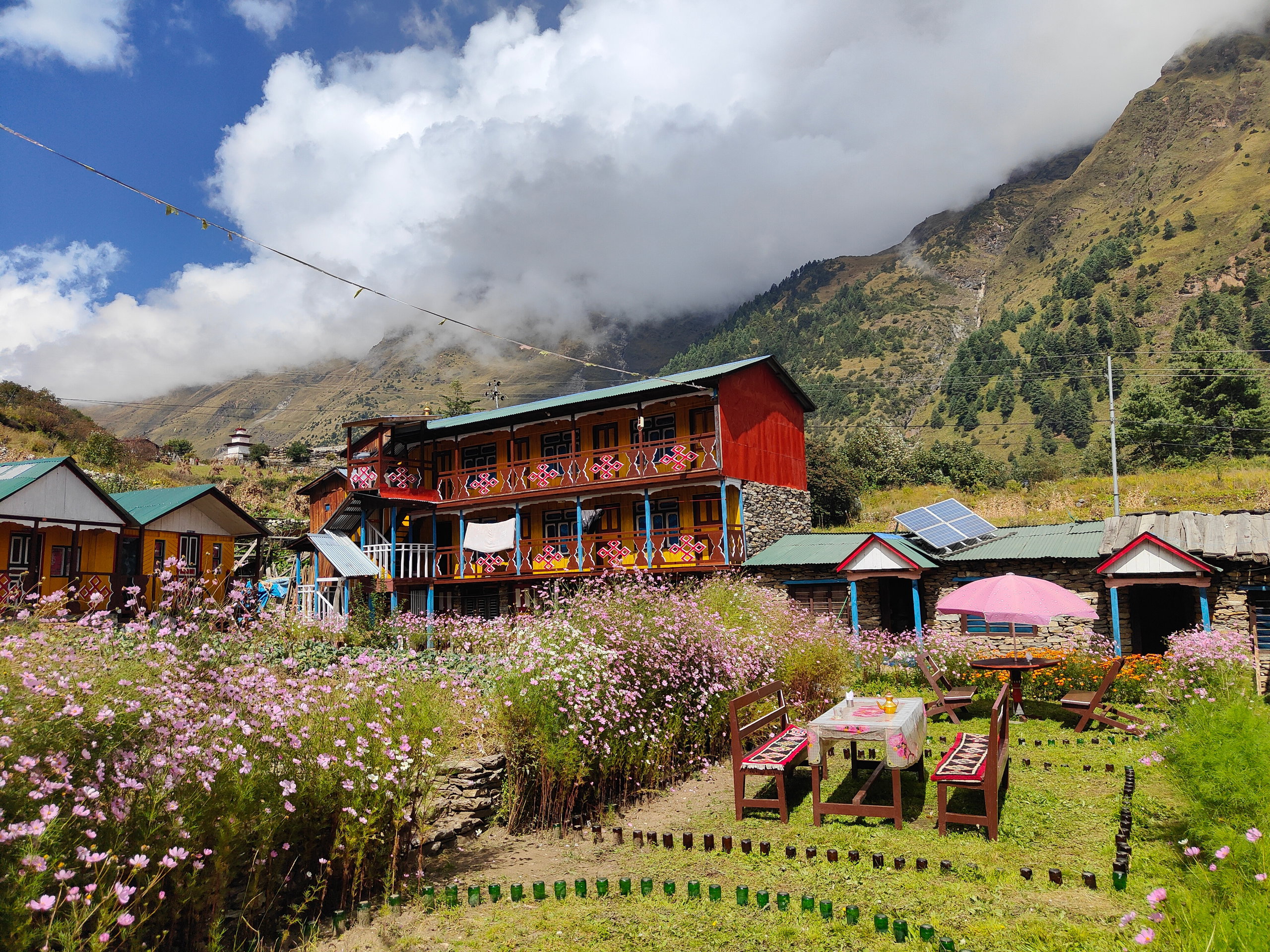
An essential part of Nepal’s major trekking routes, teahouses are small lodges where you can eat, rest and spend the night before setting off again the next day. It is largely thanks to them – and above all to the locals who run them – that Nepalese treks have become accessible.
Setting off completely independently for a week means carrying a tent, a camping stove, camping gear and a large portion of your food. Your rucksack quickly becomes heavy and it’s harder to recover. Teahouses change the game: you walk during the day with relatively light kit, you have hot meals in the morning and evening – and sometimes at lunchtime – and you always have a proper bed to sleep in at the end of the day.
Comfort remains basic, especially as you gain altitude, but that doesn’t stop you from recovering very well. The healthy tiredness and the cool nights probably have a lot to do with it.
BTwo treks, and my first nights in a teahouse
I discovered trekking in Nepal in October 2024, starting with a twelve-day trek on the Manaslu Circuit, followed by a few days’ rest in Pokhara and then a four-day trek on the Mardi Himal trail. It was during these two treks that I discovered Nepalese teahouses: simple, cosy lodges, often built and furnished with whatever was to hand, sometimes a bit makeshift, but always full of charm.
At the centre there is almost always a large dining room, often the only room in the lodge that is actually heated. This is where we eat, warm up and spend the evening. Trekkers and guides gather round the same tables, discussing the next day’s stages or pulling out a pack of cards. On a multi-day trek, you regularly bump into the same people again: a group you overtake in the morning may well turn up two evenings later in the same communal room.
The rooms are rather basic: usually two single beds, blankets and thin partitions, sometimes made simply of plywood. They offer protection from the wind, but far less from noise, and they are not heated.
CThe end of the day: a shower, a change of clothes and some rest
After a few days’ walking, a little routine sets in. You usually arrive at the teahouse in the afternoon, drop off your rucksack and then, weather permitting, try to have a quick shower and wash a few items of clothing before the sun goes down. Socks and underwear dry relatively well as long as they’re left out in the sun; once night falls, it’s a different story.
Hot water isn’t always included. It may be heated using gas or solar panels, in which case there’s a charge for it. At lower altitudes, running water is sometimes naturally warm enough without needing to be heated. Higher up, the water can become downright freezing, and the choice quickly boils down to paying the extra charge… or putting off your shower until the next day.
Bathroom facilities also vary considerably. Some teahouses have Western-style toilets and sometimes even a private bathroom; others only have shared or squat toilets. Toilet paper isn’t always provided, so it’s best to carry a little with you at all times.
Electrical sockets follow the same pattern: they are sometimes available in the rooms of the lower-altitude lodges, but are more often grouped together in the communal area. Both charging facilities and Wi-Fi may become chargeable or unavailable as you gain altitude.
Once you’ve unpacked, one of the best moments of the day begins! You can relax and spend time reading, resting in your room, strolling through the village or simply sitting outside gazing at the mountains before dinner.
DDal bhat and evenings by the stove
Meals are usually eaten quite early. The menus are very similar from one teahouse to another: noodles, fried rice, soups, potatoes, momos, eggs, pancakes… and, of course, dal bhat, Nepal’s national dish.
Consisting of rice, a lentil soup, vegetable curry and various side dishes, it is simple, nutritious, vegetarian and inexpensive. A significant advantage over other dishes is that it’s all-you-can-eat!
Dinner follows rules of etiquette that differ slightly from those in Western cultures. Trekkers eat first, whilst the guides take care of the service, bringing out the dishes and ensuring everything runs smoothly at the table. Only once the group has finished their meal do the guides take their turn to eat, often together.
You can suggest to your guide that they eat with the group, but they will usually politely decline. It is simply the custom in Nepalese culture, so you shouldn’t take it as a desire to keep their distance.
Once the meal is over, the evening continues in the communal lounge. You chat with trekkers you’ve met on the trail, have a natter with the guides and, very often, play cards. That’s actually how I discovered Dhumbal, a very popular game in Nepal.
After dinner and a bit of a chat, tiredness usually gets the better of you and you soon drift off to sleep.
The next day, the teahouse comes to life with the first light of dawn. You get dressed in the cool morning air, pack away your sleeping bag, prepare your rucksack and then head to the communal room for breakfast. A few minutes later, the flip-flops disappear into the depths of your rucksack, your walking boots are back on your feet, and everyone sets off along the trail towards the next stage of the journey.
EMuch more than just a place to sleep
Before setting off for Nepal, I mainly saw teahouses as a logistical solution: a place to eat and sleep without having to carry my entire home on my back.
After two treks, however, they’ve become one of the aspects of the experience I’ve enjoyed the most. You arrive tired, gather round the stove with the people you’ve met during the day, share a meal and get a glimpse into life in the mountain villages.
Teahouses allow you to travel light, of course, but above all they are an integral part of trekking in Nepal. And amongst the memories that linger once you’re back home, there are not only the peaks and the sweeping landscapes encountered along the way: there are also those evenings spent at an altitude of several thousand metres.