AAn overview of the country
Nepal is not a particularly large country compared to its neighbours, India and China, but it nevertheless boasts a wide variety of landscapes and a rich ethnic diversity.
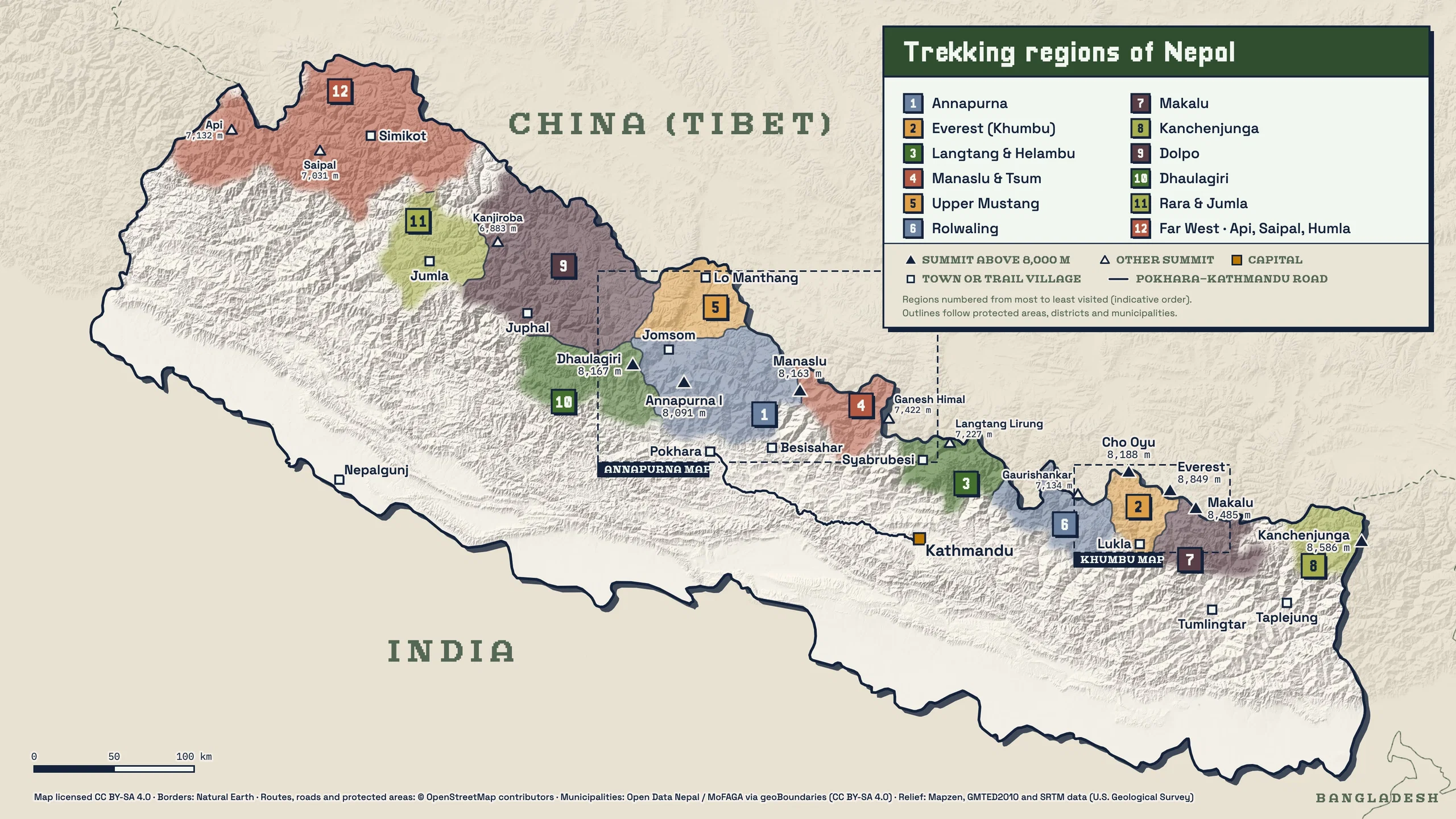
In the south of the country lies a low-lying plain with tropical forests known as the Terai. But what Nepal is famous for – and what delights trekkers – is the heart of the Himalayas in the north of the country, home to many of the world’s highest peaks, which form a natural border with Tibet.
To give an idea of visitor numbers, in 2025 Nepal welcomed 1,158,459 foreign visitors, of whom around 15% came for trekking or mountaineering (Nepalese Ministry of Tourism). The remainder is divided between holidays and leisure (60%), pilgrimages (15%) and other reasons, with a significant proportion coming from neighbouring countries; India and China alone account for more than a third of arrivals.
The simplest and most common way for foreign visitors to arrive is by plane at the country’s main international airport, Tribhuvan International Airport (KTM) in the capital, Kathmandu. Over 90% of trekkers – the vast majority – head for the Annapurna and Khumbu (Everest) regions.
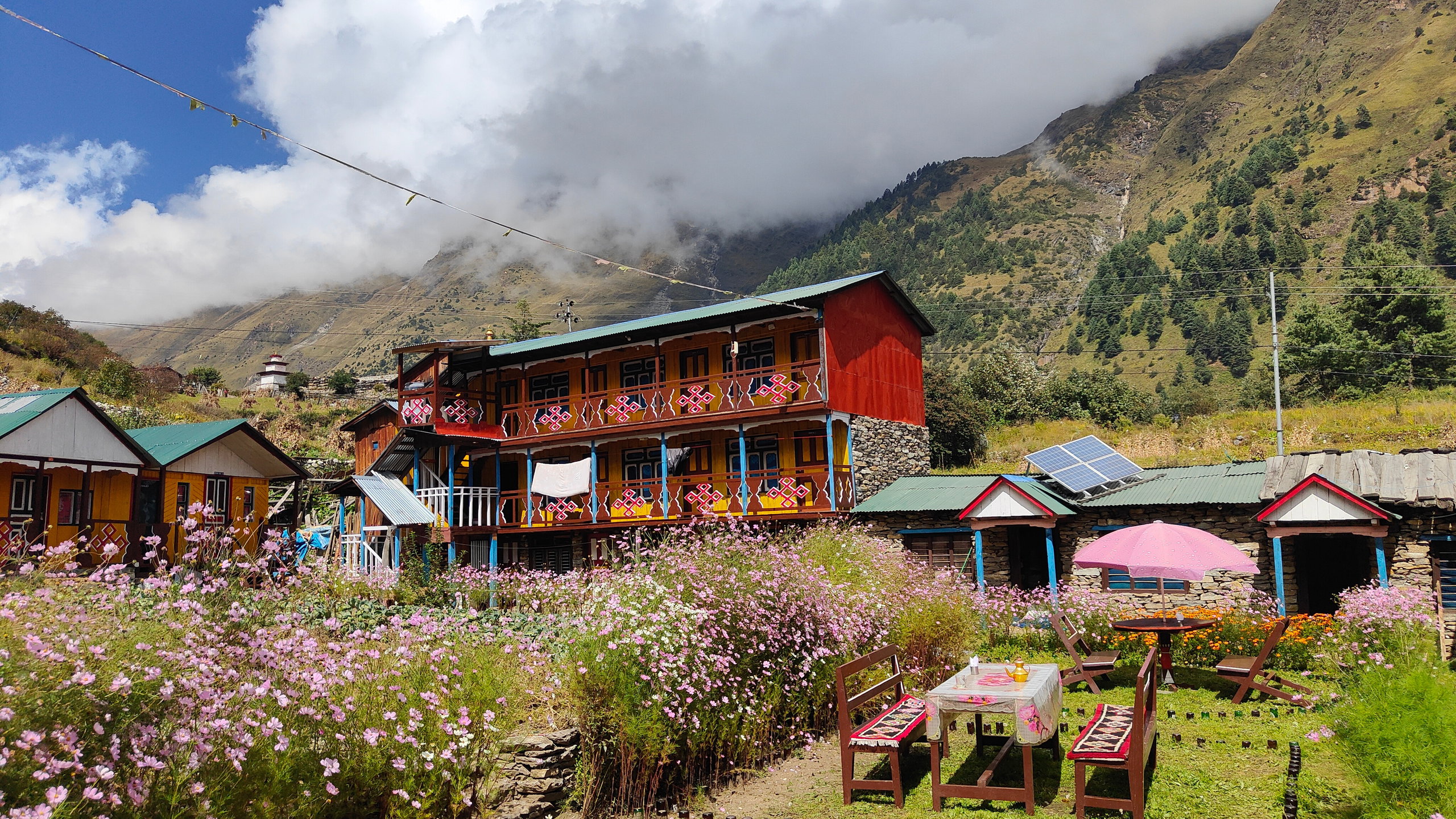
Why? Because these are the most accessible regions and they offer the infrastructure expected by most trekkers, first and foremost a well-established network of teahouses.
BSome visitor figures
Based on the 2025 statistical report from the Nepalese Ministry of Culture, Tourism and Civil Aviation (available here), we can find information on visitor numbers across Nepal’s various trekking regions.
This data is useful both for understanding the dynamics of trekking in Nepal and for planning and choosing the dates for your next trek.
One thing is clear: the Annapurnas account for the vast majority of visits, followed by the Khumbu. Manaslu and Langtang trail far behind, with around 10,000 entries each, while the country’s seven other trekking regions do not even total 6,000 entries between them.
Nepal requires a permit to enter its protected or so-called restricted areas. These permits are checked at posts situated at the start of the trails, which helps to monitor visitor numbers as well as providing a small source of income for local institutions.
An important point to bear in mind: a single trekker may need several permits, and is therefore counted multiple times.
For example, in the Annapurnas, the ACAP permit is valid for a single entry: two treks in the region require two ACAP permits. For the Manaslu Circuit, you cross the Manaslu restricted zone and then finish in the Annapurnas area: you therefore need at least two permits.
For the full list, just take a look at the guides:
 ▶ Difficult
Manaslu Circuit
Nepal
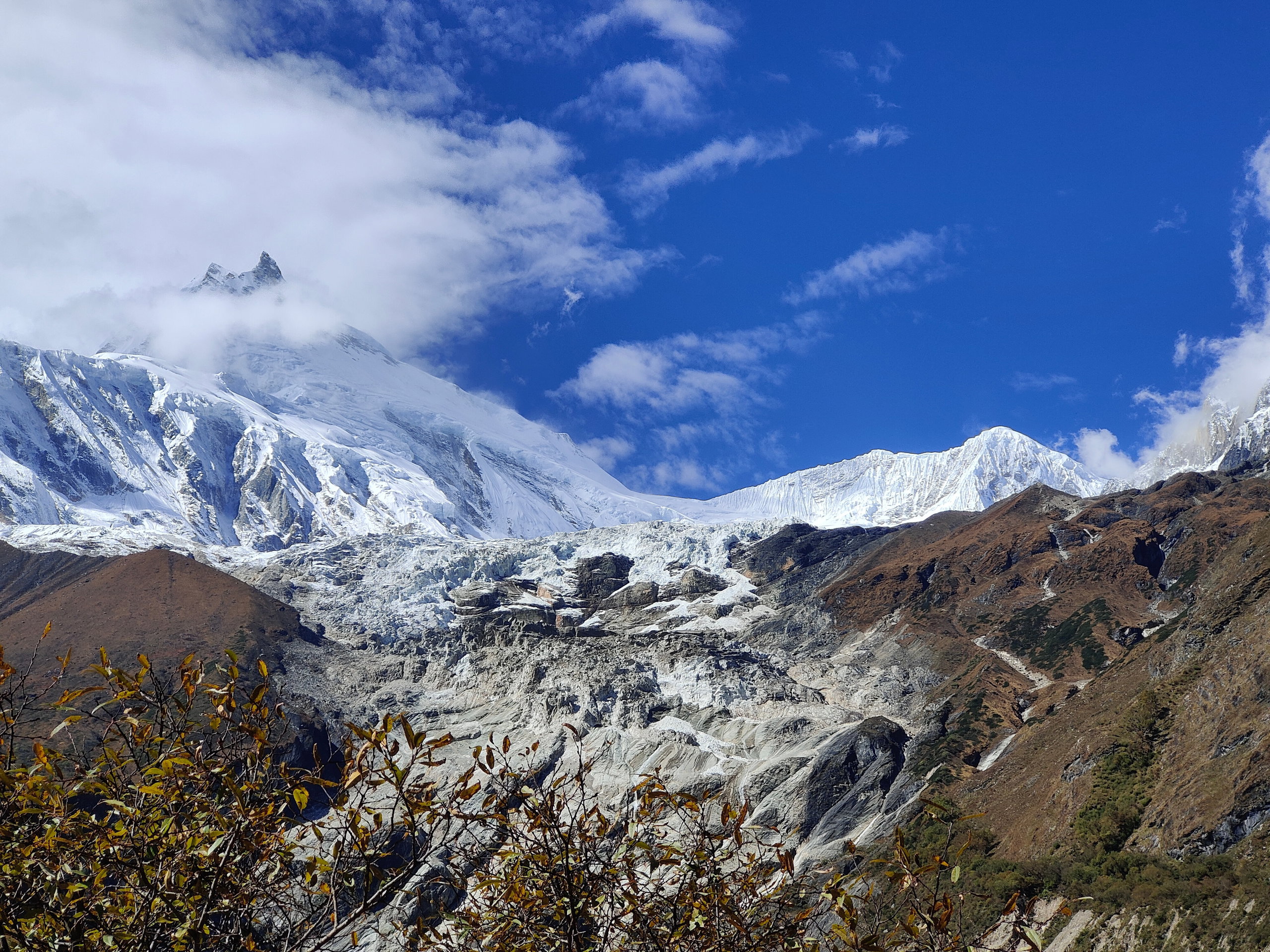
A circuit around the world’s eighth-highest peak, crossing the Larkya La at 5,150 m through remote, little-visited valleys characterised by a Tibetan-influenced Buddhist culture. From the rainforest to the alpine landscapes at the foot of Manaslu, the climate changes throughout the route.
It is clear that trekking in Nepal is mainly concentrated in two seasons: spring and autumn.
The Annapurnas are an exception. Visitor numbers there remain high all year round, with over 24,000 entries in June – right in the middle of the monsoon – and 30,000 in December. Many visitors probably opt for shorter treks staying close to Pokhara, as the higher reaches are hard going during those months.
CFocus on the two main regions
C.1The Annapurnas
The Annapurnas owe their popularity first and foremost to their accessibility. Pokhara, the major city in the centre of the country, serves as a base for all routes in the range, and many trek starting points can be reached in less than half a day’s drive.
Everywhere, the villages offer the densest network of teahouses in Nepal, meaning there’s no need to carry a tent or a camping stove; and despite a federal law on the matter, trekking without a guide is still tolerated (though this does not exempt you from obtaining the necessary permits, such as the ACAP).
Four major routes form the backbone of the range’s hiking options:
- Poon Hill is the classic short loop, taking 4 to 5 days, with a sunrise overlooking the Annapurnas and Dhaulagiri
- Mardi Himal is a wilder ridge route, which climbs as close as possible to the majestic Machapuchare
- The Annapurna Sanctuary (ABC) trek follows a gorge up to a glacial cirque surrounded by peaks
- Finally, the Annapurna Circuit is the grand traverse of the massif via the Thorong La pass (5,416 m)
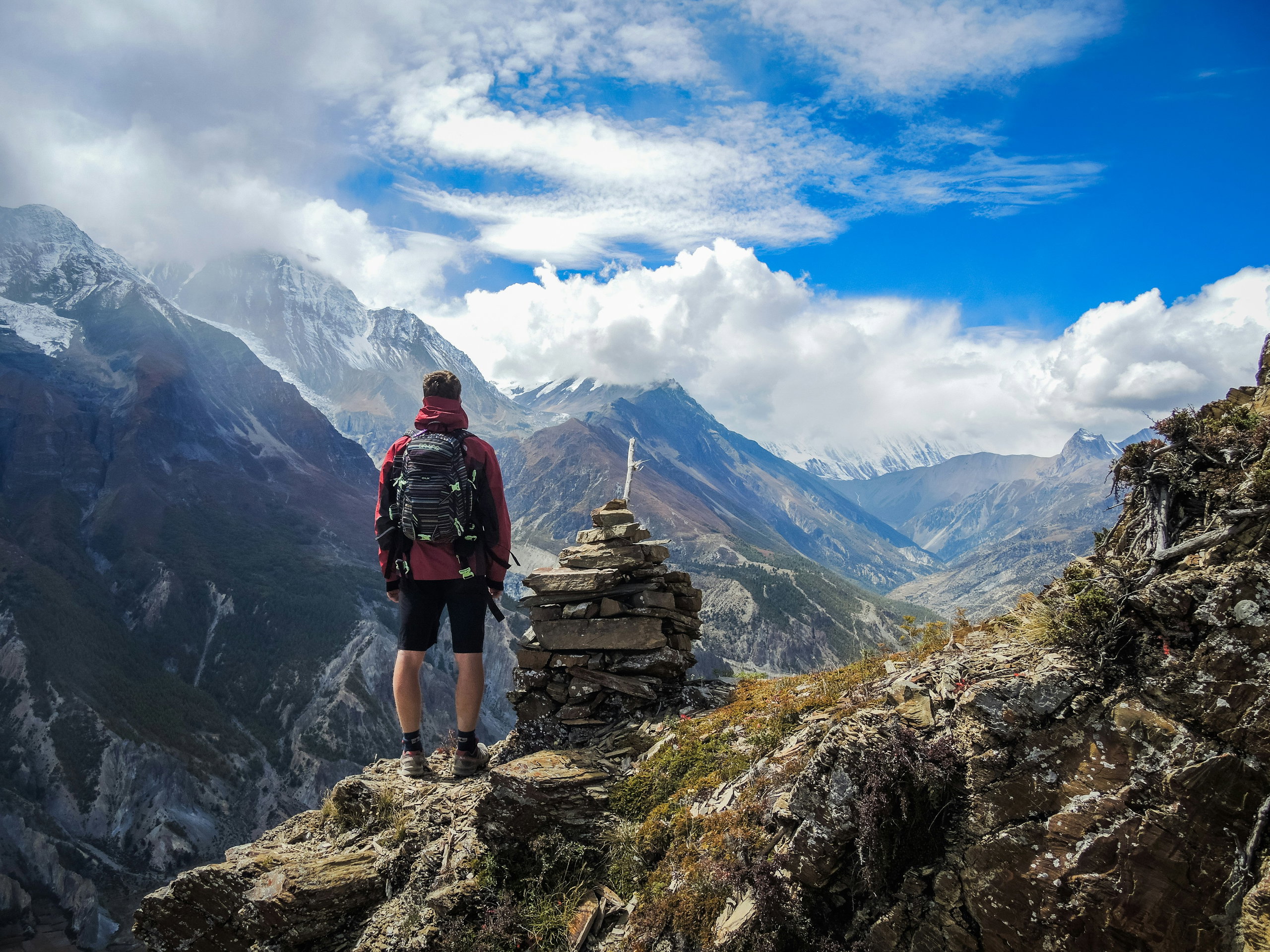
But this popularity comes at a price: in high season, the trails and lodges are very busy and, without a booking, it can be difficult to find a room at certain stops along the route. Economic development has also led to roads being built higher and higher up the valleys. As a result, the classic Annapurna Circuit route is now often shortened to its road-free section and includes alternative routes, as suggested in our guide:
 ▶ Difficult
Annapurna Circuit
Annapurna · Nepal
A Himalayan classic, crossing the Annapurna range via Thorong La at 5,416 m. From the wooded Marsyangdi Valley to the high plateaus of Manang and on to the arid landscapes of Mustang, this route retains the mountainous heart of the historic circuit, which has now been shortened at either end by the expansion of the road network.
 ▶ Moderate
Mardi Himal Trek
Annapurna · Nepal
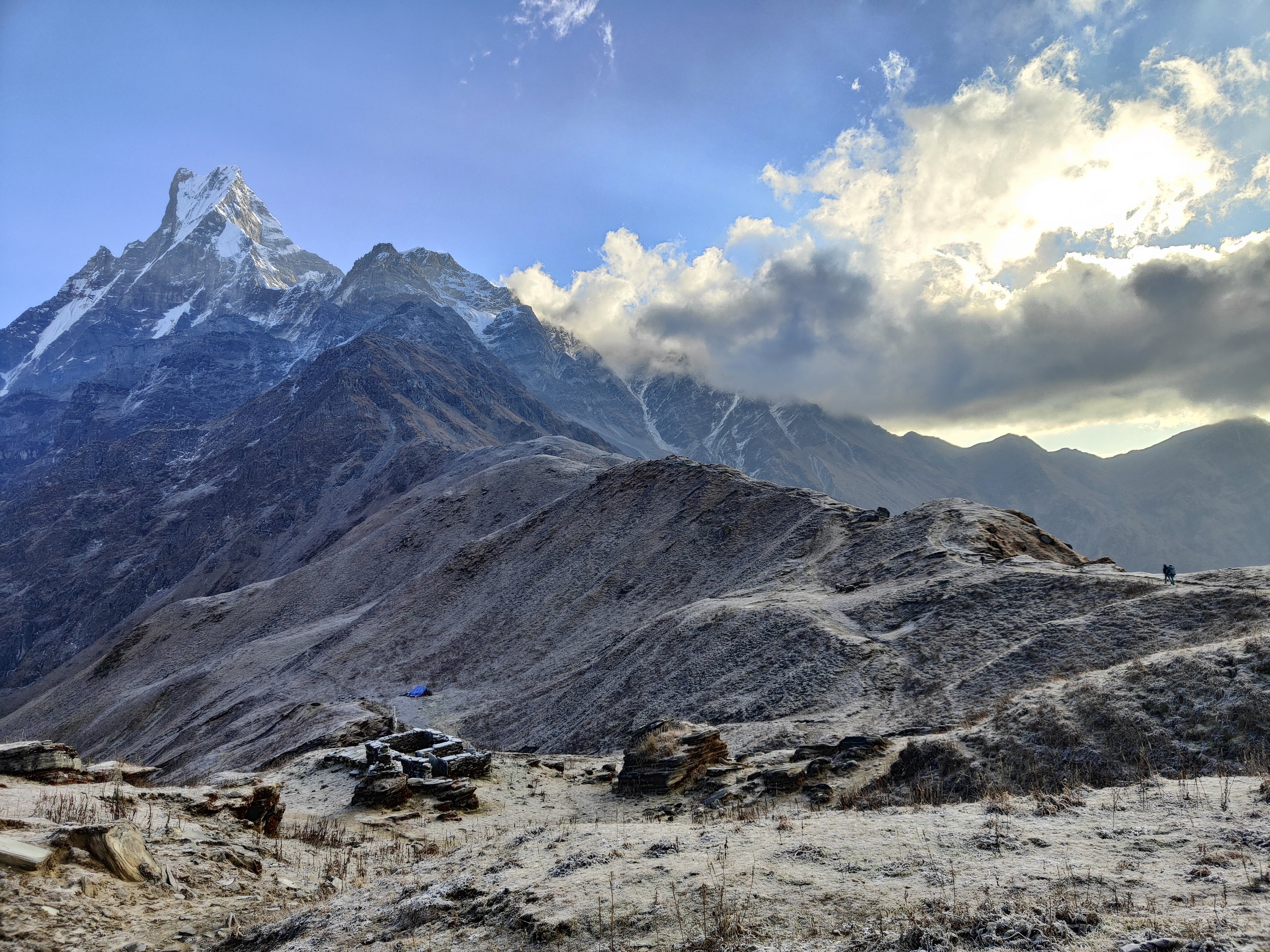
A very accessible trek in the heart of the Annapurna region, offering spectacular views of Machhapuchhre and the massif’s major peaks over the course of a few days. The route passes through rhododendron forests, mountain pastures and high ridges to a superb vantage point, without requiring a long expedition or any technically challenging sections.
C.2The Khumbu (Everest)
The Khumbu, on the other hand, takes more effort to reach. The region, which stretches at the foot of Everest within Sagarmatha National Park, is more remote from Kathmandu and road access is very difficult. Most trekkers therefore reach it by plane, landing on the sloping airstrip at Lukla (2,860 m), renowned as one of the most spectacular in the world. In high season, these flights often depart from Ramechhap, several hours’ drive from the capital, and they are entirely dependent on the weather: delays of a few days are common, and it is wise to allow for some leeway in your itinerary.
But once you’re there, the level of comfort is every bit as good as in the Annapurnas. The Sherpa villages, from Namche Bazaar to Gorak Shep, are equipped with teahouses up to over 5,000 m, which also means you can walk there without a tent or a camping stove. Furthermore, the local council has chosen not to enforce the guide requirement decided at federal level, so independent trekking remains officially possible there.
Three major routes in the region:
- The Everest Base Camp (EBC) trek is the great classic, a round trip of around twelve days from Lukla, culminating in the ascent of the Kala Patthar (5,644 m) and its unobstructed view of Everest
- The Gokyo Lakes trek follows a parallel, quieter valley up to a string of turquoise lakes at the edge of the Ngozumpa Glacier, dominated by the Gokyo Ri (5,357 m)
- The Three Passes Trek links all the valleys of the Khumbu by crossing the Kongma La, the Cho La and the Renjo La, all over 5,300 m: it is the most comprehensive and demanding traverse
However, unlike in the Annapurnas, you reach high altitude very quickly: from Namche Bazaar (3,440 m) onwards, you’ll be sleeping higher than most Alpine peaks. It’s therefore essential to allow sufficient time for acclimatisation to avoid acute mountain sickness. Visitor numbers remain fairly high, but the region offers a unique spectacle dominated by Everest and steeped in the culture of the Sherpas, a people of Tibetan origin who have lived in the region for centuries.